ScanProgress
A body composition tracking platform for gyms and supplement stores that run InBody scanners. Built end to end, submitted to Apple and Google, and running in a live retail location.
The problem
An InBody scanner gives a member a genuinely useful breakdown of their body composition: body fat, muscle mass, body water, segmental analysis. Gyms and supplement stores buy these machines specifically to give members a reason to come back and measure again.
Then the machine prints the result on a slip of paper and the member walks out with it. A week later the paper is gone. Three months later nobody can tell you whether anything actually changed, which is the only question the member cared about in the first place.
The scanner captured the data and the business immediately lost it. Both sides lose: the member has no way to see progress, and the store has no reason to bring them back.
The real insight: the store had already paid for the expensive part. The scanner was there and the data existed. What was missing was somewhere for it to live and a reason for the member to come back and add to it.
What we built
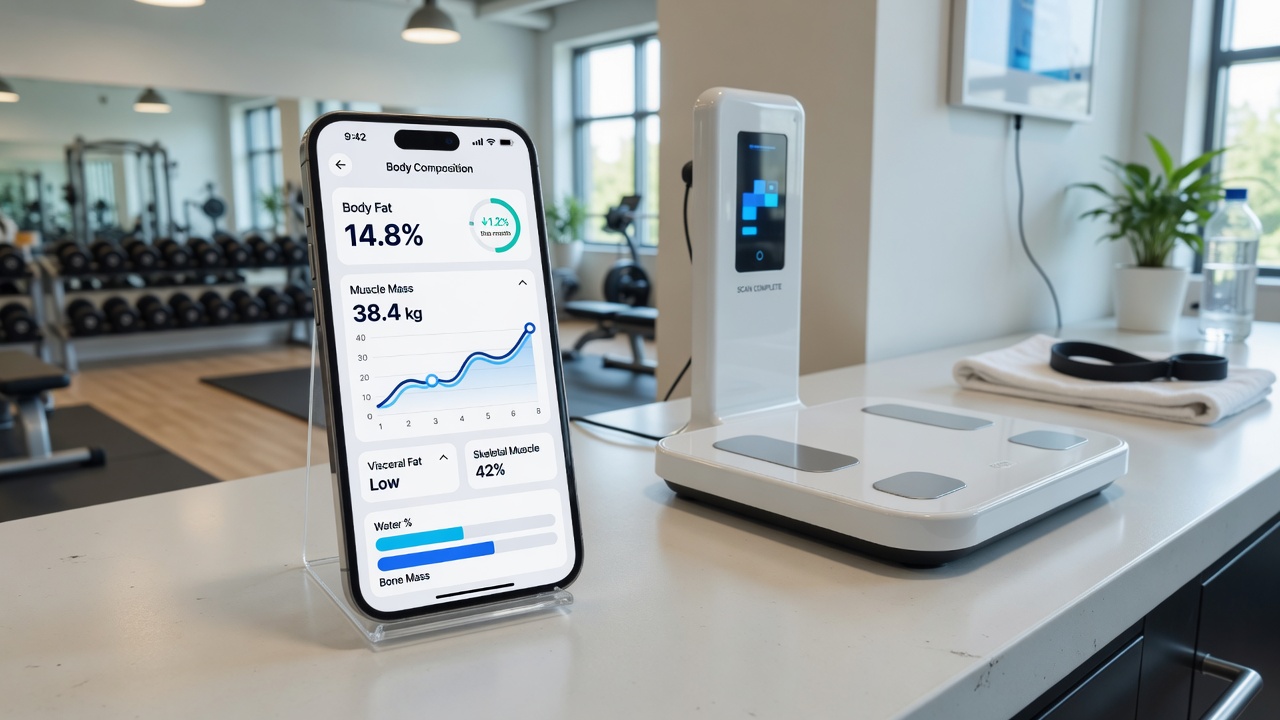
ScanProgress turns each scan into a permanent record the member can open on their phone. Instead of a printout, they get a history.
- Detailed scan breakdowns. Body fat, muscle mass, body water, and the rest of the InBody metrics, rendered so a normal person can read them.
- Trends over time. Interactive charts across every scan, so progress is visible over months instead of guessed at.
- Side-by-side comparison. Any two scans directly against each other. This is the screen that makes people sign up for another one.
- Bio age. A single readable number derived from scan metrics, because most members want one honest answer, not twelve.
- Store challenges. Members compete inside their own location, which turns a solo measurement into a group activity the store can run.
- Location-tied accounts. Sign-up binds a member to their specific gym or store, so the data stays scoped to that business.
The architecture decision that mattered
The obvious build is a single-tenant app for one store. We built it multi-location from the beginning instead: a member belongs to a location, and the app is aware of which one they belong to at sign-up.
That is more work up front and it is the entire difference between a custom app for one gym and a platform another gym can be added to. Retrofitting multi-tenancy onto a single-tenant app later is close to a rewrite. Deciding it on day one costs a schema design conversation.
Stack
Shipping to the app stores
Building an app and getting an app approved are separate skills, and the second one is where most projects stall. App review is not a formality. It means real privacy disclosures, account deletion handling, working demo credentials for the reviewer, store listing assets at exact dimensions, and a build that does not crash on a device you do not own.
ScanProgress went through that on both platforms. It is live on the Apple App Store as a universal build for iPhone and iPad, and on Google Play. It has shipped maintenance releases since launch, including a fix for store selection not appearing on the sign-up page, the kind of bug you only find once real people are using it.
Why this matters for your project: plenty of shops can build you a web page. Far fewer have taken something through Apple and Google review and then maintained it in production afterward. That is the part that gets skipped in a pitch and then discovered six months in.
Where it stands
ScanProgress is live and in use at a working retail location, with the web app and both mobile apps in production. The platform is built to add locations, which is the direction it is headed.
Have something like this in mind?
If off-the-shelf software does not fit how your business runs, tell us what you are working around. You get a straight answer about whether it is worth building.